
Letter: Joint call to consider EU recyclers’ concerns on potential recycled aluminium export measures
Dear Executive Vice‑President Séjourné,
Dear Commissioner Šefčovič,
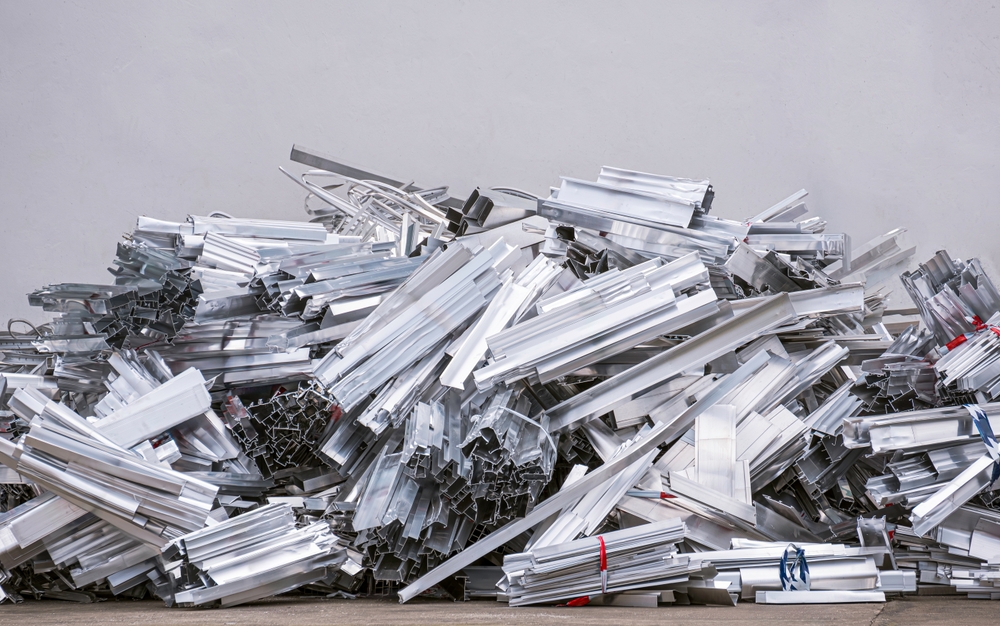
As the EU explores options to reinforce industrial competitiveness and material security, any policy must be grounded in facts and the realities of the full aluminium value chain. In this context, the undersigned associations and recycling companies wish to raise serious concerns about any consideration of export restrictions on recycled aluminium (‘scrap’), which would not only be based on flawed assumptions, but would also devastate Europe’s recycling sector and undermine the EU’s industrial and material security objectives.
The rationale for such measures, meaning the allegation that Europe faces a shortage of aluminium scrap, does not reflect current market realities. Europe’s recycling industry already plays a pivotal role in supplying high-quality recycled materials, often exceeding domestic demand, and contributing positively to the EU’s trade balance. We, Europe’s recyclers, fully support the goal of a strong and competitive European aluminium sector. However, policies aimed at strengthening one part of the value chain should not come at the expense of another – especially one that is an essential pillar of that same ecosystem, delivering on circularity, competitiveness and resource efficiency.
Like primary producers, EU recyclers face increasing operational costs, strict environmental and regulatory requirements, and intensifying global competition, factors that must be carefully considered in any policy response.
Moreover, we are concerned that the discussion is moving forward without sufficient consideration of market evidence and the realities faced by recyclers on the ground. Measures of this scale require a solid factual basis and full engagement with all parts of the industry.
In the absence of evidence demonstrating a structural market deficit, introducing export restrictions without meaningful engagement with all stakeholders risks significant unintended consequences. For recyclers, this would likely translate into reduced operations, postponed or cancelled investments, and significant volumes of recyclable material remaining uncollected and unprocessed. Such outcomes would directly undermine the EU’s circular economy objectives, weaken industrial value chains, and put jobs at risk.
Moreover, the current political and economically context demonstrates that the fallacious arguments previously used to demand export restrictions on recycled aluminium could also be applied to aluminium ingots and billets. Disruptions to the aluminium supply in the Gulf have driven price increases and prompted European exports of aluminium products to Asia, taking advantage of higher demand abroad while EU demand remains weak due to a slowdown in key sectors.
Overall, the co-signatories of this letter are deeply concerned about the far-reaching negative implications any export measures would have—not only for the recycling sector, but for the European aluminium industry as a whole and the circular economy more broadly.
We therefore urge the Commission to carefully reassess the need and potential impact of export restrictions on recycled aluminium, and to work with the recycling sector to identify solutions for a truly “balanced trade measure” that genuinely strengthen Europe’s industrial base.
We stand ready to engage constructively on a balanced path forward for the EU aluminium sector.
Sincerely,
The co-signatories