What we recycle

Plastics

Plastics are composed of polymers i.e., compounds made of many small molecules.

Ferrous metals

Ferrous metals, primarily composed of iron, include materials like steel and cast iron, which are commonly found in construction, manufacturing, and transportation.

Non-Ferrous metals

Non-ferrous metals, such as aluminum, copper, lead, zinc, and titanium, do not contain iron and are valued for their resistance to corrosion and high conductivity.

Paper

Recycled paper is a versatile material that can replace or supplement virgin pulp to create new products like packaging, newspapers, and insulation.

Textiles

Textiles, including both synthetic fibers like polyester and natural fibers like cotton, are integral to daily life, with global production nearly tripling since 1975.

Tyres

Tyres contain multiple valuable materials such as rubber (75%), steel (15%) and textile fibres (10%).

Construction & Demolition

Construction and demolition (C&D) waste includes materials like concrete, bricks, wood, metals, glass, plastics, and hazardous substances such as asbestos.

End-of-life Vehicles

End-of-life Vehicles (ELVs) contain valuable materials like metals (steel, aluminum), plastics, rubber, and glass, as well as batteries.

E-waste

E-waste, otherwise referred to as waste electronical and electronic equipment (WEEE), is mainly composed of non-ferrous metals (nickel, copper, lead, etc.

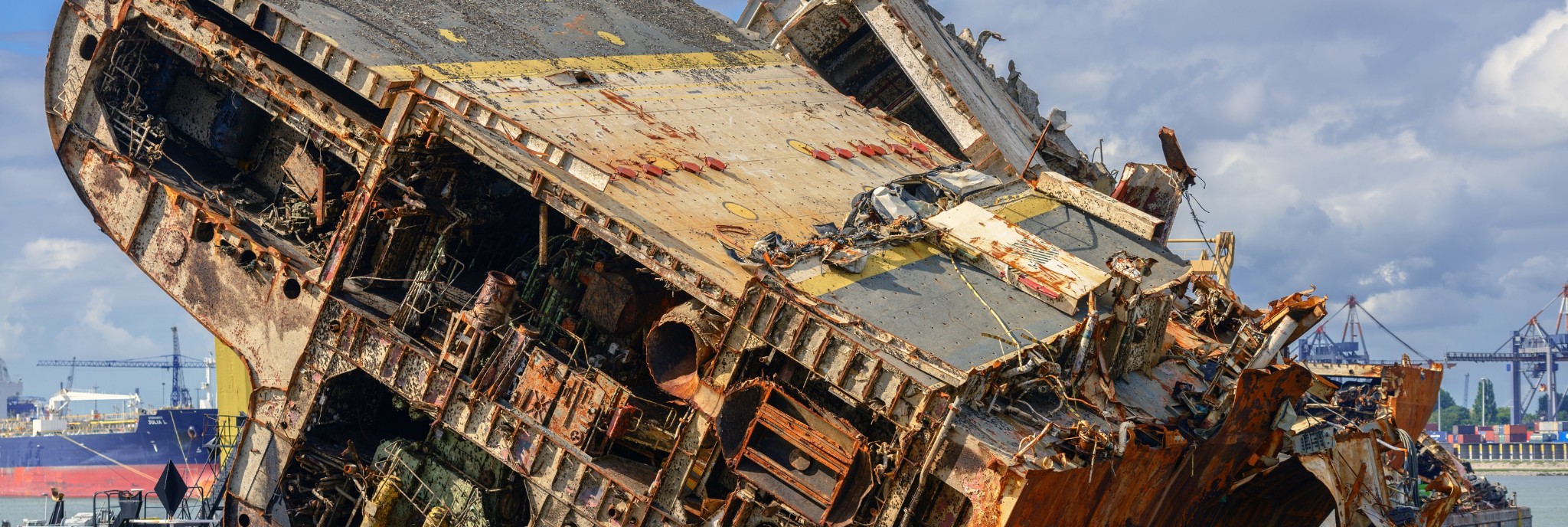
Ships

End-of-life ships are decommissioned vessels that contain valuable materials like steel, metals, and electronics, along with hazardous substances such as asbestos, oils, and toxic chemicals.

Who we are

Ships

Ships

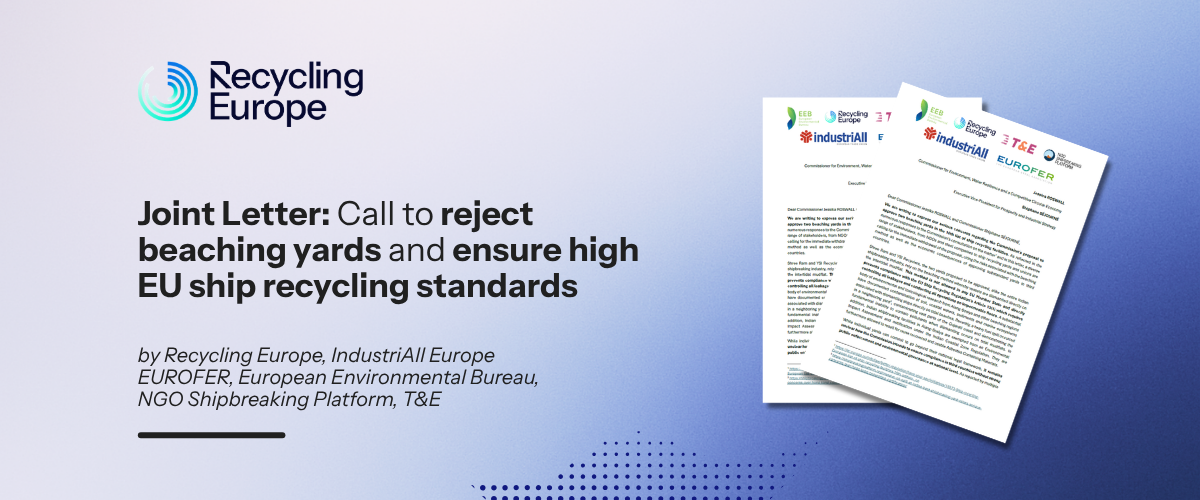
At the end of their operational life, the vast majority of vessels are dismantled outside the EU, often in regions where environmental and social standards are insufficient. This not only raises serious concerns for human health and environmental protection, but also leads to the loss of valuable materials—particularly steel scrap—that could otherwise be recovered within Europe’s circular economy.

To address these challenges, Recycling Europe’s Ship Recycling Group (ESRG) brings together industry stakeholders to promote safe, sustainable, and competitive ship recycling practices in Europe, ensuring that end-of-life vessels are treated as a strategic source of resources rather than waste.

Less than 40%

Less than 40%

of e-waste is recycled in the EU, the rest is unsorted

 data-lazy-src=

Related Publications

Stay informed with our latest insights, anytime, anywhere.