What we recycle

Plastics

Plastics are composed of polymers i.e., compounds made of many small molecules.

Ferrous metals

Ferrous metals, primarily composed of iron, include materials like steel and cast iron, which are commonly found in construction, manufacturing, and transportation.

Non-Ferrous metals

Non-ferrous metals, such as aluminum, copper, lead, zinc, and titanium, do not contain iron and are valued for their resistance to corrosion and high conductivity.

Paper

Recycled paper is a versatile material that can replace or supplement virgin pulp to create new products like packaging, newspapers, and insulation.

Textiles

Textiles, including both synthetic fibers like polyester and natural fibers like cotton, are integral to daily life, with global production nearly tripling since 1975.

Tyres

Tyres contain multiple valuable materials such as rubber (75%), steel (15%) and textile fibres (10%).

Construction & Demolition

Construction and demolition (C&D) waste includes materials like concrete, bricks, wood, metals, glass, plastics, and hazardous substances such as asbestos.

End-of-life Vehicles

End-of-life Vehicles (ELVs) contain valuable materials like metals (steel, aluminum), plastics, rubber, and glass, as well as batteries.

E-waste

E-waste, otherwise referred to as waste electronical and electronic equipment (WEEE), is mainly composed of non-ferrous metals (nickel, copper, lead, etc.

Ships

End-of-life ships are decommissioned vessels that contain valuable materials like steel, metals, and electronics, along with hazardous substances such as asbestos, oils, and toxic chemicals.

Who we are

Reju joins Recycling Europe’s Textiles branch
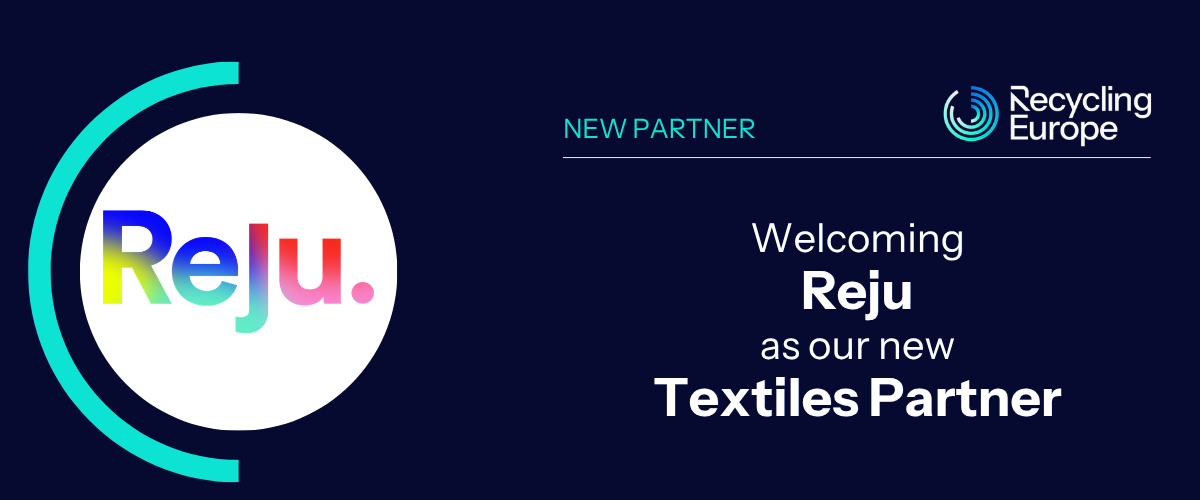
Brussels, 19 June 2026 – Recycling Europe is pleased to welcome Reju as the newest partner of its textiles branch, Recycling Europe Textiles, reinforcing its commitment to advancing textile circularity and supporting competitive, well-functioning markets for recycled materials in Europe.


Reju is a textile-to-textile regeneration company focused on creating innovative solutions for regenerating polyester textiles and post-consumer PET waste, and brings together leading engineers, scientists and textile experts across Europe and North America. Its pilot Regeneration Hub is located in Frankfurt, Germany, and has also announced the sites of future industrial scale Hubs in Chemelot, Netherlands, Rochester, New York State and Lacq, France.


Julia Ettinger, Secretary-General of Recycling Europe, said: “We are delighted to welcome Reju as our newest partner of Recycling Europe Textiles. This partnership shows how industry collaboration can scale textile circularity at the speed Europe now needs — unlocking both environmental and economic opportunity”.


Patrik Frisk, CEO of Reju said: “Building partnerships like this one are important and we have the opportunity to establish a genuine circular ecosystem for textile recycling and invite collaboration across the entire value chain”.
At a time when strong demand for circular textiles, fair market conditions and investments in infrastructure are critical, partnerships like this are key to strengthening the resilience and circularity of Europe’s recycling value chains.

View the publication

View the publication

Related Publications

Stay informed with our latest insights, anytime, anywhere.