Recycled construction materials need a market, stakeholders tell EU at Recycling Europe’s Ecomondo event
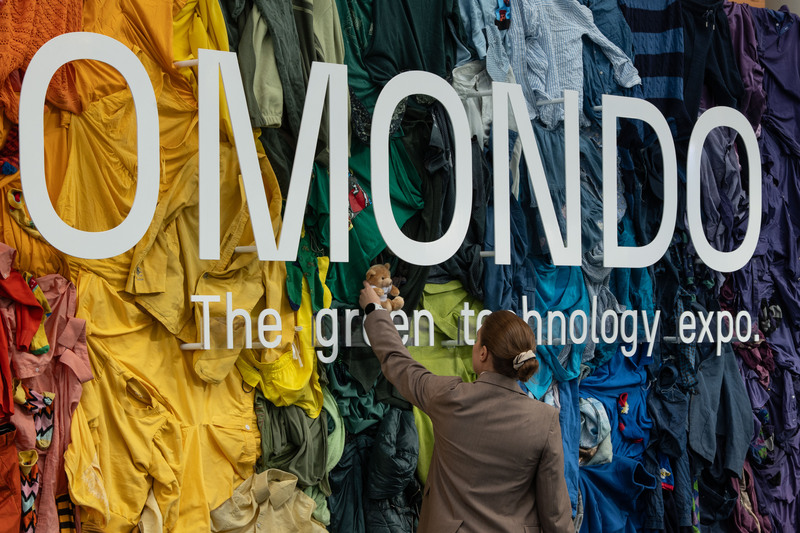
Rimini, 4 November 2026 – For the third consecutive year, Recycling Europe’s Construction & Demolition Branch brought together policymakers, manufacturers, recyclers, local governments and environmental organisations at Ecomondo, where speakers agreed that recycled construction materials need a real market and that the upcoming Circular Economy Act should help create one.
The event, Advancing the EU’s sustainable construction framework through the Circular Economy Act, looked at how the Circular Economy Act (CEA), the Public Procurement Act (PPA), the Industrial Accelerator Act (IAA) and the Construction Products Regulation could work together to build stronger markets for recycled materials.
Opening the conference by video message, MEP Pierfrancesco Maran, Chair of the European Parliament’s ENVI Committee, highlighted the central role of construction in Europe’s economy and the challenge of building while using fewer resources. He said the success of the CEA will depend on connecting the pieces: creating demand, enabling materials to move across borders and strengthening Europe’s capacity to turn waste into resources.
Loïc Brocard (Recycling Europe) then presented the Horizon Europe Builders project, in which Recycling Europe is a partner. Launched in June 2026 for 36 months, the project will design, test and validate scalable harmonised extended producer responsibility (EPR) schemes for plastics construction products, such as resilient flooring, pipes and resin-based sanitaryware.
In the panel that followed, moderated by Loïc Brocard, Xavier Meyer (Saint-Gobain) called for pre- deconstruction audits and selective demolition to recover more construction products, noting that most windows removed from buildings still end up in landfill. He added that recycled materials must be cost-competitive with virgin ones if they are to be widely used. Federica Pozzi (ECOS) agreed on the need for audits but argued that high recovery rates are not enough on their own: reuse and higher-value applications must also be promoted. She welcomed the quality criteria introduced in the PPA and the role public procurement under the IAA can play in creating lead markets for low-carbon products.
Demand was also at the heart of Marco Sirotti’s contribution (Bellona Europa). Solutions to decarbonise cement already exist, he said, from supplementary cementitious materials that replace clinker to carbon capture and storage, but they need stable demand to be financed. He also called for digital pre-demolition audits, digital product passports and harmonised end-of-waste criteria across borders. Erica Locatelli (ICLEI) brought the view of local governments, explaining how public procurement and incentives such as tax exemptions can drive circular construction and build markets for recycled materials. She also pointed to ICLEI’s recently launched City-Industry Dialogue as a way to deepen cooperation with industry.
Pär Larshans (Recycling Europe Construction & Demolition Branch and Ragn-Sells) spoke about the economics of recycling, pointing to weak demand for recycled materials and the fact that landfilling is still cheaper than recycling. He questioned who should bear the costs under the polluter-pays principle and noted that the Builders project could help identify which materials should fall under an EPR scheme. Closing the session, Giorgio Bressi (ANPAR) gave an Italian perspective, calling for a risk-based approach for the EU end-of-waste criteria for the mineral fractions of construction and demolition waste and greater market acceptance of recycled aggregates. He presented Italy’s mandatory green public procurement criteria as a model for the rest of Europe.
The discussions showed broad agreement that circular construction needs harmonised supply measures alongside predictable demand for recycled materials. As the CEA takes shape, Recycling Europe will keep working with the whole value chain to make that happen. Recycling Europe warmly thanks Ecomondo for hosting the event, and all speakers and participants for their contributions.
Note to editor: Recycling Europe (formerly EuRIC) is the voice of Europe’s recycling industry, including 83 national federations and companies across 24 EU & EFTA countries. From metals and paper to plastics, textiles, tyres, ships, construction & demolition waste, WEEE and ELVs, our members transform waste into resources—powering Europe’s circular economy, ensuring resource autonomy, and boosting competitiveness and sustainable industrialisation across the continent. For press-related enquiries, please contact Zoi Didili, Recycling Europe’s Senior Public Affairs & Communications Advisor, by email at zdidili@recyclingeurope.org or by phone at +32 (0) 489 09 46.
Image copyrights: Ecomondo