
EP and Council positions on EPR authorised representative undermine harmonisation and the single market
Brussels, 27 October 2026 – Last week, the European Parliament and the Council adopted their positions on the proposed suspension of the obligation to appoint an authorised representative (AR) for Extended Producer Responsibility (EPR), and the two co-legislators are heading in completely different directions.
The Council limits the suspension to packaging, applying it only to producers placing less than one tonne per Member State per year, while allowing national authorities to reinstate the AR case by case, with the suspension running until 2032. The Parliament, by contrast, restricts the suspension to micro and small enterprises but extends it to batteries, electrical and electronic equipment, textiles and single-use plastics until 2035. Recycling Europe’s position remains clear: the AR obligation should be maintained for all EPR streams, and for all company sizes.
Both approaches run contrary to the objectives of the upcoming Circular Economy Act (CEA): harmonising EPR and improving the functioning of the single market. Instead of one clear EU rule, producers would face obligations that vary by waste stream, company size, volumes placed in each Member State, and national decisions. That means more fragmentation, more complexity, and a higher risk of free-riding, which leaves waste management and recycling activities underfunded and shifts costs onto compliant producers and recyclers.
As set out in our position paper Financing Europe’s circular economy: EU Recyclers’ recommendations for effective EPR schemes, published in June, the AR is the legal link that makes EPR enforceable where producers are not established. Real simplification will come from coherent EU harmonisation, not from diverging exemptions. Recycling Europe therefore calls on the co-legislators to i) drop the suspension of the AR obligation from the Environmental Omnibus and keep the current framework for all EPR streams; and ii) wait for the Circular Economy Act to address the AR and improve EPR schemes comprehensively, through harmonised AR rules, a dedicated producer registry, single-platform reporting, full cost coverage and strong enforcement.
Julia Ettinger, Recycling Europe’s Secretary General said: “Parliament and Council agree EPR needs fixing, but not on how, and both answers would fragment the single market further. Europe needs one coherent EPR framework, and the Circular Economy Act is where to build it”.
Note to editor: Recycling Europe (formerly EuRIC) is the voice of Europe’s recycling industry, including 83 national federations and companies across 24 EU & EFTA countries. From metals and paper to plastics, textiles, tyres, ships, construction & demolition waste, WEEE and ELVs, our members transform waste into resources—powering Europe’s circular economy, ensuring resource autonomy, and boosting competitiveness and sustainable industrialisation across the continent. For press-related enquiries, please contact Zoi Didili, Recycling Europe’s Senior Public Affairs & Communications Advisor, by email at zdidili@recyclingeurope.org or by phone at +32 (0) 489 09 46.
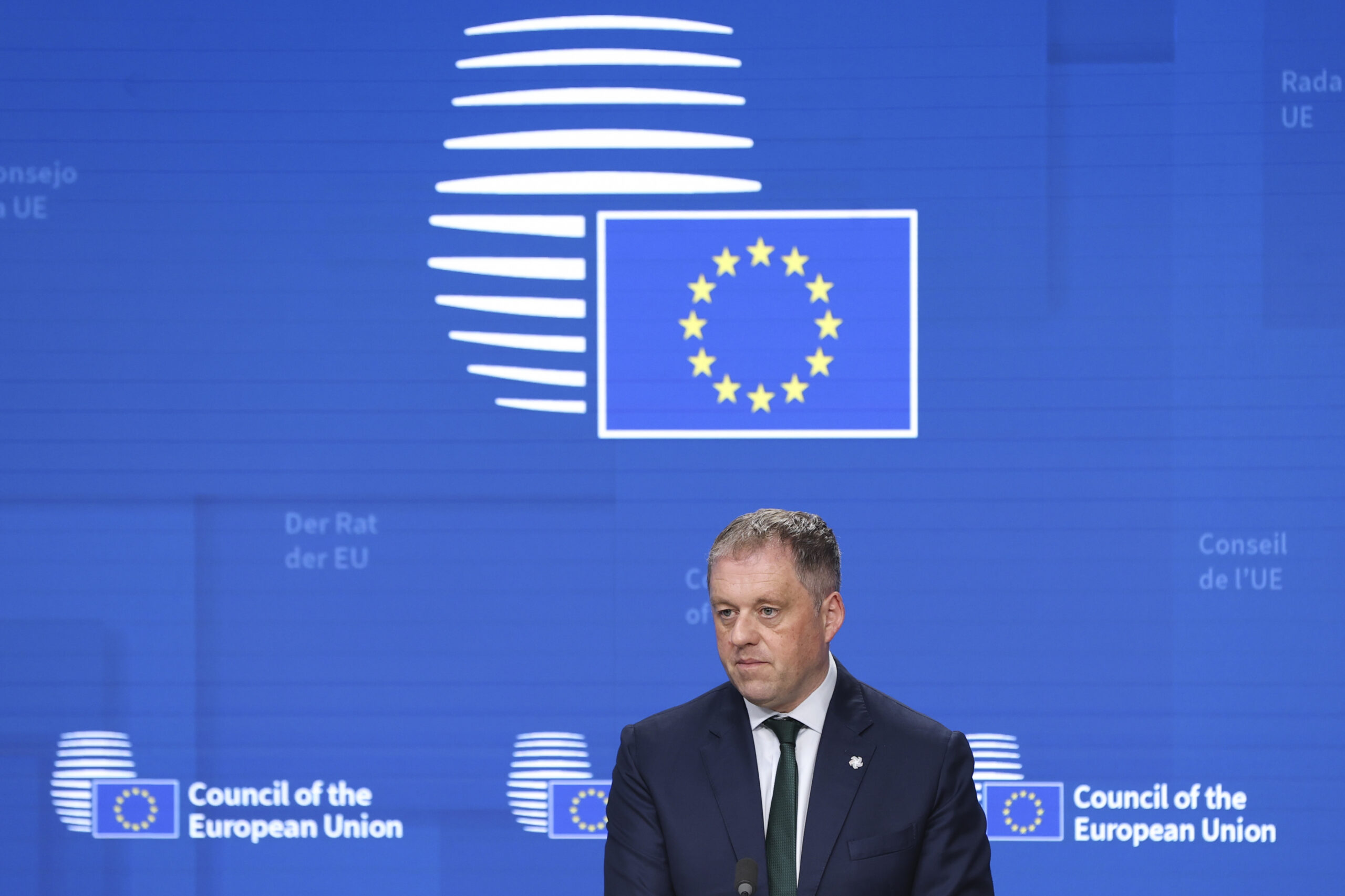
Thomas BYRNE (Minister of State at the Department of the Taoiseach and at the Department of Foreign Affairs and Trade with special responsibility for European Affairs; and at the Department of Defence, Ireland)
Copyright: European Union