


BOPP films continue to advance despite a constantly changing regional landscape
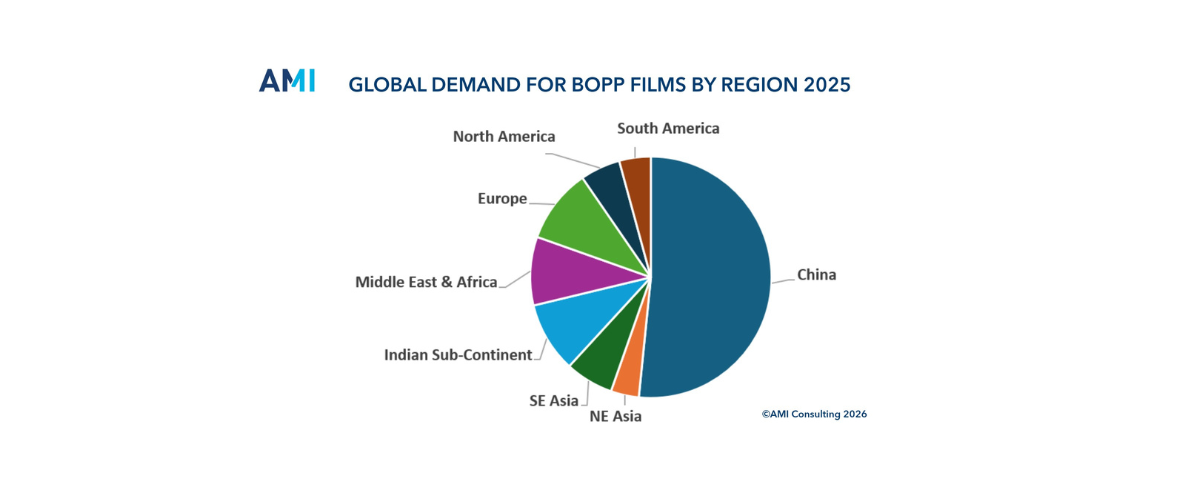
BOPP films remain an integral part of global delivery of goods, and investment in capacity indicates continued confidence in its future
July 2026 — AMI Market Intelligence has released the new edition of its authoritative report offering a deep dive into the global BOPP films market, providing industry stakeholders and investors with a comprehensive analysis of market dynamics, technological advancements, and competitive pressures shaping the global market.
Whilst recent global macro-economic challenges such as inflationary pressures, economic instability, geopolitical conflict, and rising protectionism have impacted the BOPP market, AMI’s biax film research team has observed positive signs, and long-term growth prospects remain optimistic. Following a period of significant volatility in material consumption, driven first by the COVID-19-related surge in retail packaging demand and subsequently by widespread destocking, global demand for BOPP is expected to return to a more stable growth trajectory. Forecasts indicate a compound annual growth rate (CAGR) of more than 3% through to 2030.
Global investment in BOPP production capacity has continued throughout the five-year period to 2025. While AMI’s research indicates that the pace of capacity expansion is likely to slow over the next five years, output will increase from ever-wider and more efficient production assets. Thanks to BOPP’s strong position in many of its core applications; difficult to replace in essential food packaging and the expanding global snacks sector, and its greater penetration in retort pouches, emerging high-tech and new energy applications, BOPP films are well positioned for sustained long-term growth.