What we recycle

Plastics

Plastics are composed of polymers i.e., compounds made of many small molecules.

Ferrous metals

Ferrous metals, primarily composed of iron, include materials like steel and cast iron, which are commonly found in construction, manufacturing, and transportation.

Non-Ferrous metals

Non-ferrous metals, such as aluminum, copper, lead, zinc, and titanium, do not contain iron and are valued for their resistance to corrosion and high conductivity.

Paper

Recycled paper is a versatile material that can replace or supplement virgin pulp to create new products like packaging, newspapers, and insulation.

Textiles

Textiles, including both synthetic fibers like polyester and natural fibers like cotton, are integral to daily life, with global production nearly tripling since 1975.

Tyres

Tyres contain multiple valuable materials such as rubber (75%), steel (15%) and textile fibres (10%).

Construction & Demolition

Construction and demolition (C&D) waste includes materials like concrete, bricks, wood, metals, glass, plastics, and hazardous substances such as asbestos.

End-of-life Vehicles

End-of-life Vehicles (ELVs) contain valuable materials like metals (steel, aluminum), plastics, rubber, and glass, as well as batteries.

E-waste

E-waste, otherwise referred to as waste electronical and electronic equipment (WEEE), is mainly composed of non-ferrous metals (nickel, copper, lead, etc.

Ships

End-of-life ships are decommissioned vessels that contain valuable materials like steel, metals, and electronics, along with hazardous substances such as asbestos, oils, and toxic chemicals.

Who we are

12 October 2022

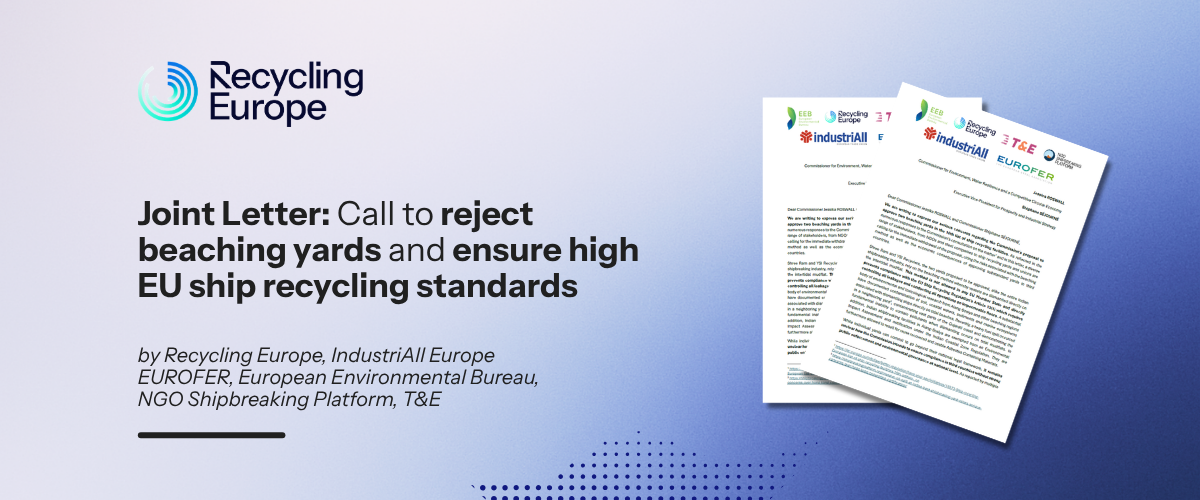
Press Release | European recyclers demand recycled content targets as EU Commission seeks to keep recycling exports in Europe

European recyclers are urging EU decisionmakers to introduce mandatory targets for recycled materials in new products as proposed EU waste shipment rules seek to excessively limit exports of almost 27 million tons of recycled materials outside Europe.

While European recyclers do not oppose export prohibitions of problematic waste outside Europe such as mixed plastics, indiscriminate restrictions will suppress demand for high-value recycled materials such as metals and paper.

If MEPs want to ensure waste is recycled in Europe, they must enshrine binding targets for the use of recycled materials in intermediate products such as metals, paper, and plastics,” says Emmanuel Katrakis, Secretary General of EuRIC, the European recycling industries federation. “If export prohibitions go ahead, high-value materials destined for recycling will instead pile up in landfill or end up incinerated. Polluting extracted raw materials will have an advantage over recycling in the absence of appropriate market conditions,” he added.

Currently, only 12% of materials used in EU production come from recycling and proposed export restrictions would reduce this even further. Mandatory targets for recycled materials can instead stimulate market demand in the EU, reducing reliance on international markets and thereby stimulating a truly European circular economy that prevents drastic amounts of CO2 emissions.

Download the publication

Download

Related Publications

Stay informed with our latest insights, anytime, anywhere.