

CLEANMAT: New EU project to cut emissions and flux use in aluminium recycling through digital sorting, intelligent pre-treatment and advanced melt refining
Recycling aluminium uses a fraction of the energy of primary production and is central to a circular metals industry. Yet conventional recycling still relies on hazardous fluxing agents and chemical cleaning, and generates significant emissions such as particulates, VOCs, dioxins and salt slag waste while struggling to turn mixed, contaminated scrap into high-quality alloys.
CLEANMAT (Smart Clean Aluminium Material Processing) is an EU-funded (€7,325,420.90) Horizon Europe project that aims to deliver an end-to-end, low-emission pathway for turning challenging scrap streams into high-performance aluminium alloys. It links scrap sorting, pre-treatment, melt refining and alloy qualification through a Digital Thread, using AI-driven multi-sensor characterisation to detect residual contaminants that evade conventional sorting and to secure feedstock purity. Closed-loop heat pre-treatment will safely remove organic coatings and residues, while two complementary refining routes (near-zero flux processing for induction furnaces and ultra-low flux retrofits for rotary, reverberatory and crucible furnaces) apply magnetohydrodynamic flow, vacuum distillation and high-shear melt conditioning to cut flux use by up to 97% without sacrificing alloy quality or yield.
The processes will be validated at industrial scale with automotive and recycling partners, benchmarked through life-cycle, techno-economic and occupational-safety assessments, and aligned with EN standards — building a replicable route to safe, low-emission and circular aluminium recycling, and reinforcing Europe’s position in clean metals.
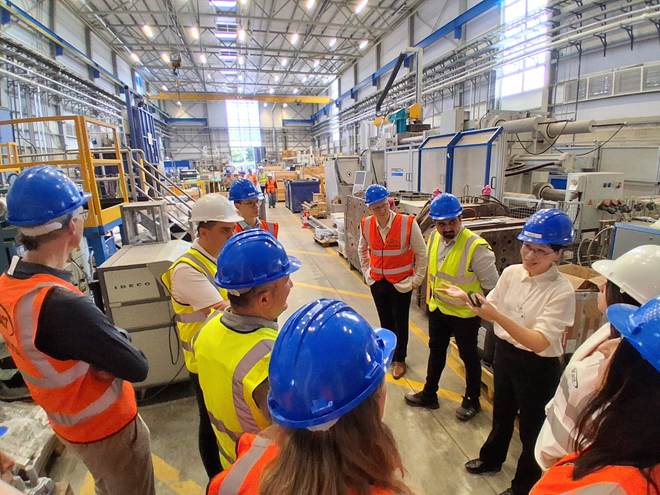
Partners touring BCAST’s casting and processing facilities at Brunel University of London, where much of the refining work will be developed and tested.
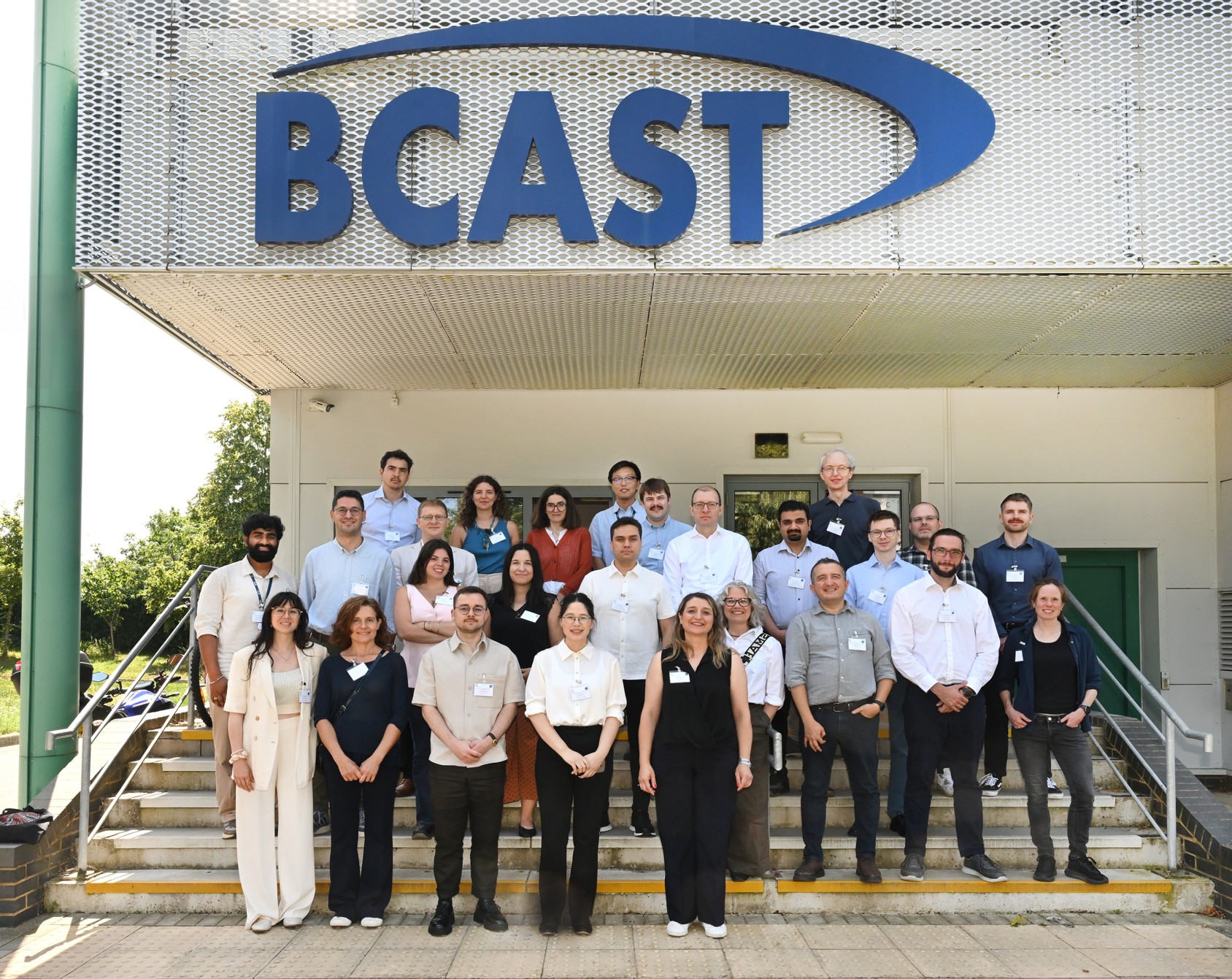
The consortium met on 22 and 23 June 2026 at coordinator Brunel University of London, home of the Brunel Centre for Advanced Solidification Technology (BCAST), to launch the project. Over the two days, partners presented the project’s work packages, opened technical and implementation discussions across the value chain, and toured BCAST’s casting and processing facilities.
CLEANMAT started on 1 June 2026, runs for 36 months and is coordinated by Brunel University of London (UK), together with RWTH Aachen (DE), Otto Junker (DE), Zyomax (UK), NTNU (NO), CRF – Centro Ricerche Fiat (IT), TU Delft (NL), Ford Otosan (TR), Fraunhofer (DE), IRES (BE), Doktaş (TR), GBP Metal Group (ES), Teknopar (TR), Alumisel (ES), Gemmate Technologies (IT), European Aluminium (BE) and Recycling Europe (BE). By demonstrating cleaner, digitally enabled recycling, CLEANMAT aims to strengthen Europe’s leadership in safe, low-emission and circular aluminium.
This project has received funding from the European Union’s Horizon Europe research and innovation programme under Grant Agreement No. 101294748. Views and opinions expressed are those of the author(s) only and do not necessarily reflect those of the European Union or the granting authority. Neither the European Union nor the granting authority can be held responsible for them.