
Joint Statement on draft delegated act on the Green-Listing Initiative for Waste Shipments

The signatories to this statement represent companies and industries operating across the European recycling ecosystem. Our members are active at different stages of the circular value chain, including the collection, sorting, pre-treatment and processing of end-of-life products and waste, as well as the smelting and refining of metals and other secondary raw materials.
Together, our sectors form an interconnected European value chain in which waste often need to move between Member States and operators. Efficient and predictable intra-EU shipments are therefore essential to ensure that these materials can move efficiently across the different stages of the circular value chain
- Green-listing as an enabler of Europe’s circular economy
We welcome the European Commission’s initiative to facilitate shipments of certain non-hazardous waste destined for recycling within the EU and support the draft Delegated Regulation amending Annexes III, IIIA, IIIB and IV of Regulation (EU) 2024/1157.
The ability to move suitable non-hazardous waste between Member States under the general information requirements of Article 18, rather than through the prior written notification and consent procedure, will significantly reduce existing administrative burdens and facilitate access to recycling and recovery capacity across Europe. This is particularly important for waste streams whose recycling value chains operate across national borders and require several stages of treatment before materials can be returned to the European economy, which is the case for most materials recovered from WEEE dismantling and processing.
As recognised by the Commission, facilitating such shipments can contribute to the development of a single market for high value secondary raw materials, including critical and strategic raw materials, while supporting recycling at scale and the environmentally sound management of waste within the Union. This initiative therefore represents an important contribution to strengthening Europe’s circular economy, building strategic autonomy and reinforcing the competitiveness and resilience of European recycling value chains.
In particular, we welcome the Commission’s proposals for new entries covering, inter alia, certain non-hazardous metal waste derived from building, construction and demolition activities, non-hazardous electrical and electronic waste, solid, inert permanent magnets from end-of-life products and metal waste from end-of-life vehicles.
The proposed approach recognises that recycling involves several successive treatment and recovery operations and that components and fractions generated through proper treatment, dismantling and shredding may need to move between operators within the internal market. Facilitating these movements will help improve access to specialised recycling capacity, support the efficient recovery of valuable secondary raw materials and reinforce the EU internal market for secondary raw materials and enable the re-industrialisation of Europe.
2. Supporting legal certainty and consistent implementation
To ensure that the objectives of the Delegated Regulation are fully realised in practice, we would welcome additional clarity on certain aspects of its implementation. Such clarification would help operators and competent authorities apply the new framework in a harmonised manner across Member States and facilitate a smooth transition to the new regime.
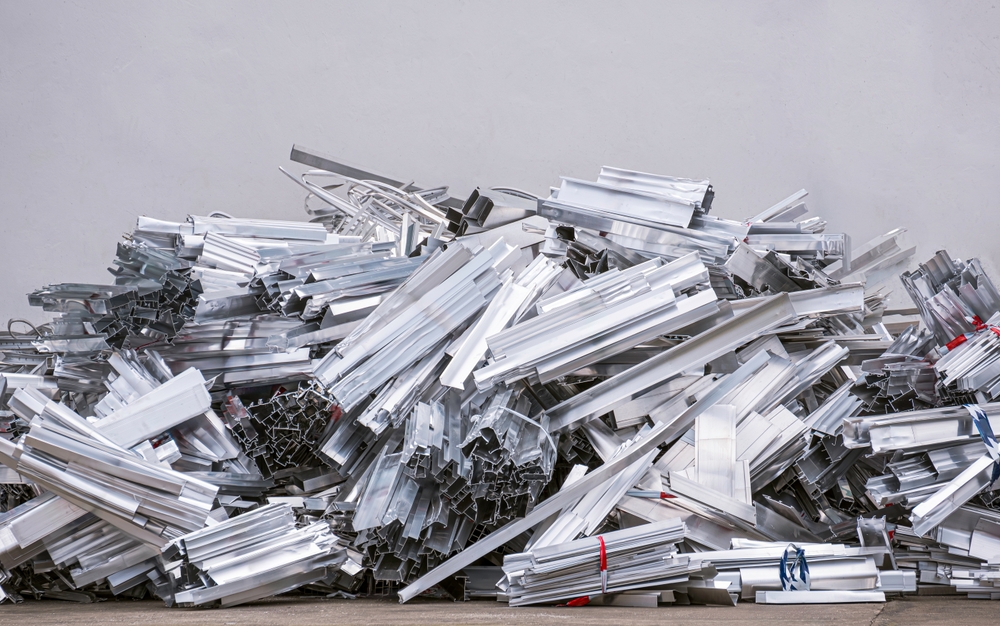
- The scope of BEU07 should be expanded to explicitly include other metal-containing waste. The proposed entry currently refers to waste consisting mainly of aluminium, steel, or both, derived from building, construction and demolition activities. However, these activities generate a broader range of recyclable metal waste streams beyond aluminium and steel, including copper pipes and cables, which should also be explicitly covered by BEU07. Including such waste streams would provide legal certainty that their shipments are subject to the general information requirements under Article 18 and help ensure that these valuable secondary raw materials can be efficiently transported to appropriate recycling facilities across the EU.
- We would welcome further guidance illustrating the types of waste streams and fractions that may fall within BEU09. The draft already provides useful examples, including printed circuit boards and fractions arising from shredding or dismantling. Building on this approach, a non-exhaustive and non-prescriptive list of illustrative examples could provide additional clarity without limiting the scope or flexibility of the entry. Such a list, as given in the explanatory memorandum of the draft Delegated Regulation point 2, paragraph 3, could be provided separately or incorporated into the second paragraph under entry BEU09 and would help operators and competent authorities distinguish between BEU09 and EU49 in practice, reduce uncertainty regarding waste classification, and minimise the risk of divergent interpretations, unnecessary delays or shipments being rejected at borders.
- Further clarification regarding the scope and practical application of the proposed EU49 entry would be particularly valuable. The draft provides that, for intra-EU shipments, Basel entry Y49 would not apply and that EU49 would instead cover “Waste electrical and electronic equipment, not covered by A1181 or BEU09.” Further guidance on the types of non-hazardous e-waste expected to fall within EU49, and on the practical distinction between EU49 and BEU09, would therefore be helpful. Such clarification would facilitate the correct classification of e-waste, reduce the risk of divergent interpretations by operators and competent authorities, and support consistent implementation across Member States.
We believe that these clarifications would complement the Commission’s proposed approach and support its objective of establishing a more harmonised, predictable and efficient framework for intra-EU shipments of waste containing valuable secondary raw materials destined for recycling. The new classification represents an important step forward in the right direction. Building on this progress, it is equally important to ensure a stable, consistent and predictable regulatory framework that provides operators fully compliant with EU legislation with the long-term certainty needed to plan, invest and further strengthen the recovery of valuable secondary raw materials in Europe.
3. Conclusion
The signatory associations strongly support the Commission’s green-listing initiative and the overall direction of the draft Delegated Regulation. Facilitating the movement of suitable non-hazardous waste between fully authorised operators is essential to enable efficient and effective recycling, strengthen the EU internal market for secondary raw materials, and support European recycling value chains, which are essential to re-industrialisation.
The draft Delegated Regulation represents an excellent first step in this direction. However, further action will be needed through the forthcoming Circular Economy Act to facilitate waste shipments within the EU and reinforce the internal market for secondary raw materials.
To support the finalisation and effective implementation of this important initiative, we would welcome further clarity on a limited number of aspects of the draft Delegated Regulation. In this regard, the signatory associations put forward the following recommendations:
| Signatories’ recommendations: Expand the scope of BEU07 to explicitly include additional non-hazardous metal waste streams arising from building, construction and demolition activities, including copper pipes and cables. Provide a non-exhaustive and non-prescriptive list of illustrative waste streams and fractions under BEU09, either separately or within the entry itself, to support consistent classification and minimise divergent interpretations, delays and rejected shipments. Clarify the scope and practical application of EU49, including its distinction from BEU09, to ensure legal certainty and consistent implementation across Member States. |